
Water pumps, seemingly simple mechanical devices, play a crucial role in industries, agriculture, and daily life. They not only enhance the efficiency of fluid transport but also continually expand their applications through technological innovation. Whether you’re searching for the best water pump for home use or need a water pump for garden irrigation, this article delves into the working principles of water pumps, the various types available, their specific applications, and maintenance tips to extend their lifespan.
How Water Pumps Work
The fundamental working principle of a water pump involves converting mechanical energy into pressure and kinetic energy of the fluid. Water pumps are generally classified into positive displacement pumps and dynamic pumps.
- Centrifugal Pumps: Featuring a rotating impeller and a fixed pump casing, centrifugal pumps utilize high-speed rotation to generate centrifugal force, moving liquid from the center outward. This creates a low-pressure zone in the pump casing that draws in liquid, while high pressure is formed at the impeller’s edge to discharge it.
- Axial Flow Pumps: These pumps use the thrust generated by the high-speed rotation of the impeller to lift water. Liquid is drawn in and discharged along the axis of the impeller, making them suitable for high-flow, low-head applications.
- Mixed Flow Pumps: Combining the features of centrifugal and axial flow pumps, these are ideal for medium flow and head situations.
- Self-Priming Pumps: Before starting, self-priming pumps must fill the pump casing with water. Once operating, the rotating impeller creates a vacuum that draws air into the pump, allowing it to self-prime.
Types of Water Pumps: Understanding Their Principles and Applications
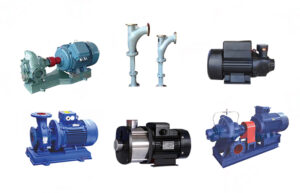
Water pumps come in various types, each suited for different working principles and applications. Choosing the right type is crucial for optimizing system performance. Here’s an overview of the most common types of water pumps:
Centrifugal PumpsCentrifugal pumps are the most prevalent type, utilizing centrifugal force to propel liquid from the center of the impeller to its edges. They are ideal for medium to small flow rates and medium to high head applications, including water supply, drainage, HVAC systems, and industrial circulation.
Axial Flow Pumps
With a flow direction parallel to the pump’s axis, axial flow pumps excel in large flow, low head situations. They are frequently used for drainage and irrigation in rivers, lakes, and reservoirs.
Mixed Flow Pumps
Combining the features of centrifugal and axial flow pumps, mixed flow pumps are suitable for medium flow and head applications. They are commonly employed in urban water supply and drainage systems as well as industrial circulation.
Self-Priming Pumps
Self-priming pumps create a vacuum to automatically draw in liquids, making them effective for shallow liquid extraction, such as clean water, sewage, and oils. They are often used for home water supply, agricultural irrigation, and wastewater treatment.
Submersible Pumps
Designed to operate fully submerged, submersible pumps are perfect for extracting sewage, sludge, and separating oil from water. Common applications include groundwater extraction, drainage, and wastewater treatment.
Deep Well Pumps
Deep well pumps are capable of extracting water from deep wells and elevating water sources, making them ideal for agricultural, industrial, and residential applications.
Piston Pumps
Piston pumps utilize the up-and-down motion of a piston to move liquids, suitable for high-viscosity and chemical liquids in high-pressure, low-flow scenarios. They are commonly used in high-pressure cleaning, petrochemical, metallurgy, pharmaceuticals, and food industries.
Gear Pumps
Gear pumps operate by moving liquid through two interlocking gears, creating a pressure differential. While they have a simple design and lower cost, they can leak more, making them best for low to medium pressure systems.
Screw Pumps
Screw pumps generate pressure by changing the volume of the pump chamber through screw rotation. They offer smooth operation, low noise, and high volumetric efficiency, making them suitable for medium and high-pressure applications.
Reciprocating Pumps
These pumps utilize the reciprocating motion of a piston or plunger to move liquid, making them ideal for applications requiring precise flow control.
In addition to these classifications, water pumps can also be categorized based on shaft orientation, housing design, number of stages, suction type, support form, drive method, special structures, usage, and materials. Selecting the appropriate water pump type is essential for ensuring optimal performance in your fluid transport system.
Key Considerations for Choosing a Water Pump
When selecting a water pump, consider these essential factors:
- Flow Rate and Head: Ensure the pump’s flow rate and head meet your specific needs.
- Durability: Opt for durable pumps to reduce maintenance costs and downtime, especially for applications requiring a heavy-duty water pump.
- Efficiency: High-efficiency pumps save energy and lower long-term operational costs.
- Compatibility: Ensure the pump is compatible with other system components, such as piping and controls.
Maintenance and Care for Water Pumps
Regular maintenance and care are crucial for the long-term stability of water pumps.
- Routine Checks: Monitor pump performance, including noise, vibration, and temperature, along with sealing and lubrication conditions.
- Clean Filters: Regularly clean filters and inlet/outlet pipelines to prevent blockages and impeller damage.
- Replace Seals: Periodically inspect seals and replace them as needed to maintain sealing efficiency.
- Lubrication: Follow manufacturer guidelines for lubrication to minimize wear and prolong pump life.
Conclusion
Water pumps are indispensable devices across various industries and households. Understanding the different types and working principles can help you choose the right pump for your needs. Whether you’re interested in water pump installation, need to read water pump reviews, or want to troubleshoot your current system, regular maintenance ensures efficient operation and extends the pump’s lifespan. With the guidance provided in this article, you can confidently select and maintain your water pump system.